
Free Shipping Across Canada on Retail Orders Over $88, $208 for the USA. Shipping Worldwide.
The word “specialty” is used in the tea industry quite frequently, but it is hard to qualify. In the world of coffee, there has been an excellent effort to truly lock down that definition amongst industry players. At JagaSilk, and amongst allies in the industry, we are trying hard to qualify this nomenclature, so as to avoid uncertainty. It also helps to build trust from producer through to consumer, if we have an understanding of what it means to be “specialty”.
Sometimes it is easier to understand something by what it is not. “Specialty” is the opposite of “commodity”. Commodity tea is grown in large volume, blended with little concern for cultivar and producer information, its main intention being homogenous flavour and low cost. Commodity tea is often bland in flavour with little to no complexity.
In the Japanese tea industry, it is often used in RTD (Ready to Drink) products like unsweetened bottled tea. Interesting flavours are achieved through combining teas extracted at different temperatures, the economic “stagflation” of the last 20 years discouraging the use of more expensive teas. This has led to greater and greater concentration of farms, and the slow but inexorable abandonment of farms that are harder to operate, especially the more traditional tea gardens on steep inclines, as they are more challenging to harvest and maintain with modern equipment. As an example, the flat terrain being terraformed in Fukuoka is much more conducive to modern technology than the steep hills in Kyoto prefecture that are the norm there. But large scale production often leads to less careful harvesting techniques and further contributes to the bland lack of complexity. In the world of maccha, commodity often encompasses not only tea grown in larger volume, but teas that don’t even qualify as maccha at all. The Japanese tea industry is kept in line through industry and cultural norms. The coops where most farmers sell their product are regulated with the use of highly educated tea graders who are ranked in skill akin to a black belt in martial arts. Therefore, there is very quick feedback year to year when teas do not meet the standard, and revenues for the farmer can increase and decrease as a result.
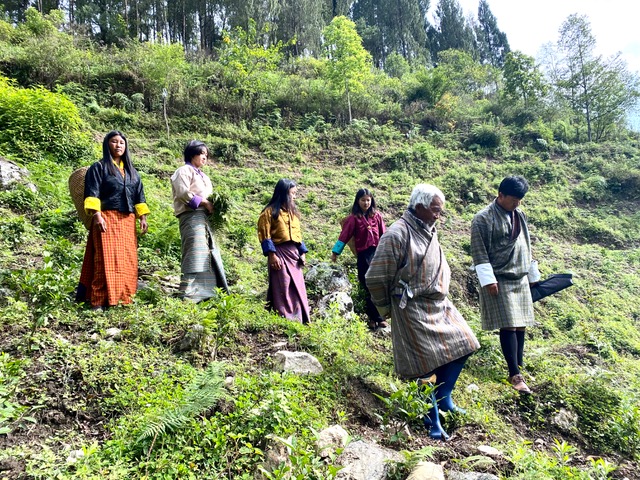
For teas out of India, a lot of important work has been done by the India Tea Board to qualify specialty teas through an initial system featuring a long line of letters. SFTGFOP means Special Finest Tippy Golden Flowery Orange Pekoe and indicates that the product is the best of the best for that estate. This is achieved through filtering large batches of production through a sizing filter and keeping larger leaves at the top and tea fannings at the bottom. It also highlights careful production. However, it becomes harder for smaller producers to demand top dollar, even when they are hand rolling (as opposed to machines) and being extremely careful with their enzymatic oxidative processes, if they do not adhere to this system. At JagaSilk, we consider an Indian tea specialty when the batches are under 20kg and the leaf appearance is one with full budsets, aromatically complex with great flavour. We also value cultivar and growing environment information, something extremely hard to find in the Indian tea industry.
In China, it can some times feel like the Wild West, but there does exist a grading system that is specific to the tea type. However, green teas can focus too much on when they were picked, regardless of the year, so it can get very specific and challenging to understand why a tea picked later that tastes and looks better is graded lower just because it is Yu Qian as opposed to Ming Qian.
When folks import coffee, if they want to focus on the “specialty” category, their coffees need to score above 80 out of 100 by Q-Graders using Specialty Coffee Association (SCA) standards. Coffees that score below 80 are considered “Premium” (70-79), “Commodity” (60-69) or “Off Grade” (below 60 points). For specialty tea, there is no universal body like the SCA, so it is harder to define “specialty” in the tea industry.
Our response is to look at dry aroma, wet fragrance, flavour, finish and body alongside visual cues like leaf appearance. We also value when we can get cultivar, farm and growing condition information. This makes a tea specialty for us.
In 2025, we decided to try and get a tea with an official score in Japan. Mr. Takaki, a farmer from Fukuoka we have worked with for close to a decade, had a friend with a license to buy on auction in Kyoto. We gave him a budget and he was able to procure #8 and #14 for us. The teas were graded out of 200.
Out of a score of 200, tencha for #14 scored 174: Appearance (33/40), Aroma (59/65), Liquid colour (16/20), Flavour (59/65), Leaf colour post extraction (8/10)
Out of a score of 200, tencha for #8 scored 184: Appearance (37/40), Aroma (61/65), Liquid colour (17/20), Flavour (61/65), Leaf colour post extraction (8/10)
We are still searching for the answer to what “specialty” tea is. We have a good idea of what it is not. This kind of competition in Japan gives us a window of what might be possible with a Q Grader system for tea and some kind of internationally recognized body. The two maccha we were able to get are fairly mind blowing. It will be an interesting road to travel when producers, buyers and consumers can calibrate a shared understanding of specialty tea.
Love maccha? Sign up and get 10% off your first order. You'll also receive new articles and video content!