
Free Shipping Across Canada on Retail Orders Over $88, $208 for the USA. Shipping Worldwide.
With the incredible popularity maccha has experienced (over the last two years especially) producers, cafes and consumers have been seeing pressure to speed up, drop costs and build efficiencies wherever possible, just to keep up. The old adage holds true though that you can only have two out of three: cheap, fast, high quality. Producers milling green tea that is not tencha and misnaming it maccha. Cafes making their tea in premixed batches and with electric whisks. The home user throwing higher and higher doses into their drinks and smoothies. Tea sold in 1kg bags that oxidize quickly. All are adding up to muddy the waters when you are trying to deliver a quality program at your cafe or home that parallels a good espresso program.
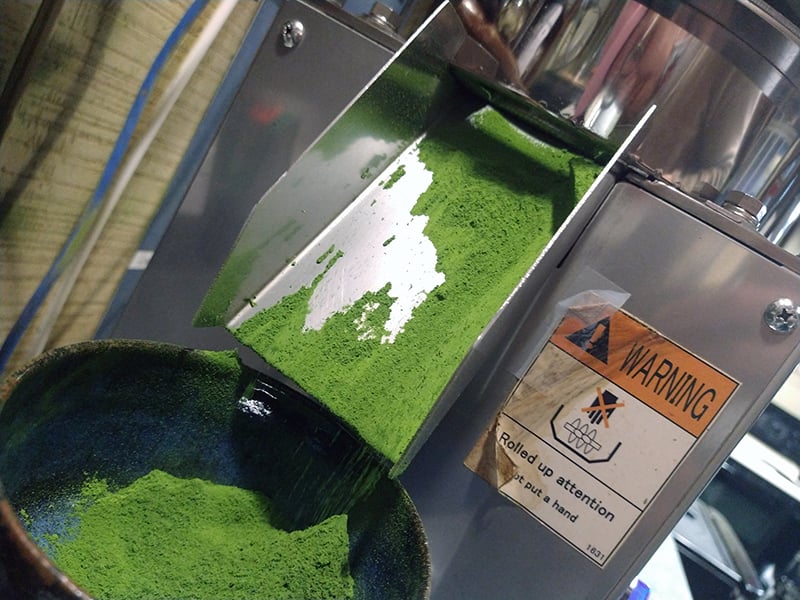
At the farm level, these pressures are encouraging large scale producers to get involved with a product they may not fully understand. To qualify, maccha needs to be made from tencha: camellia sinensis leaves that have been shade grown, harvested young, steamed, dried flat, deveined and then destemmed. The tencha is then milled to under 10 microns, and only then do we have maccha. To meet demand, some producers are milling too coarse, forcing folks to dose higher to achieve depth of flavour. Some are not even using tencha. They will mill leaves still with the veins and stems intact and call it maccha, hoping no one will know the difference. But this product does not froth up nice, and will not have good umami. Maccha made right will have texture that smears nicely into paper, that needs to be sieved or it will clump, and has umami present.
However, fresh and delicious maccha does not stay that way by accident. Sold in 1kg bags or larger, it is quick to oxidize. Even high volume cafes need to avoid large bags if they want to preserve freshness. At the very least, they should divide it into smaller tins upon receipt to slow down the oxidation process. Never put new tea on to old tea. We have noticed that umami starts to noticeably disintegrate within 3 months of milling and within 3 weeks of opening (if not sooner) and aromatics and colour a few months after. Ideally, of course, maccha would all be freshly milled, but until that day we need to be obsessive with protecting it from oxidation: heat, moisture (never refrigerate opened maccha), oxygen, light and strong odours will all do a fantastic job of oxidizing and destroying your tea.
Both at home and in the cafe, many will choose to prioritize speed over quality. We have noticed a trend in cafes to premix, and have written an article on why this should be avoided, but really a side by side comparison is all you need. Like a good espresso, a maccha shot is only good for moments after prepared. The premix will taste seaweed like, and have none of the aromatic pop, depth of flavour, or texture of a fresh shot. Maccha does not dissolve: it is a suspension rather than a solution. It is suspended particulate. A barista or home user in a hurry may forget to shake, making for a watery top of the bottle and sludge-like bottom. If you are bottling espresso shots for lattes, then so be it. But for those cafes who do not bottle their espresso for lattes and americanos, be consistent and do not do so with maccha.
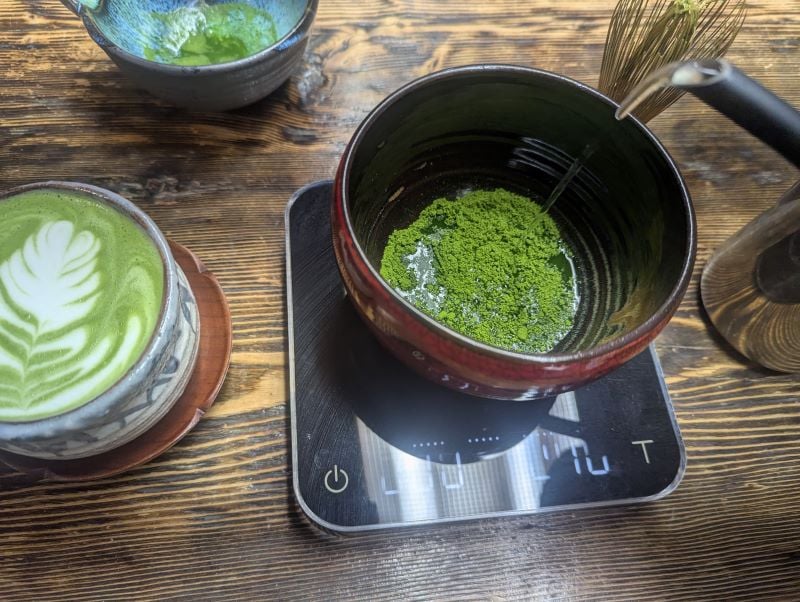
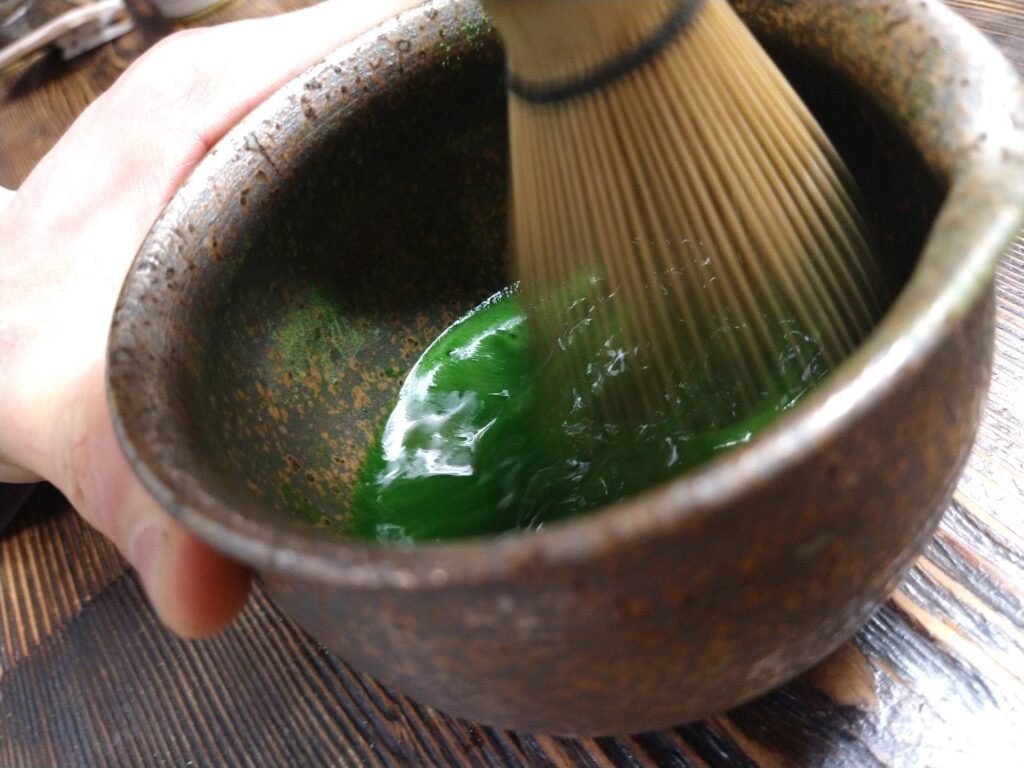
Cafes will also use hot water tower water and electric whisks instead of 60~70C hot water and a bamboo whisk. As baristas we are selecting for ideal flavours. 90 or 100C hot water towers are burning the umami and paling the colour, blowing off volatiles and making for a dry and overextracted shot. 60 or 70C, ideally via temperature variable kettle, will highlight the floral aromatics, preserve the umami, and draw out gorgeous flavour from good maccha. The bamboo whisk in turn is an ideal emulsification tool, making for a creamy texture that is unmatchable from electric whisks (which can be quite the battery wasters). With practice, they make a microfoam ideal for latte art if you want to transform your maccha into a maccha latte.
More recently we have been seeing dose recommendations increase substantially. There was a time in coffee in New York that people were pulling 30g shots, yet now we are down to 16g or 17g shots. This natural swing happens as we attempt to balance flavour complexity with cost and tradition. In the Japanese tea ceremony, where maccha has been served for over 500 years, the average dose is two scoops of the chashaku, which measures out at 1.25g~1.5g depending on the person. Over a decade ago we found that 2g was enough to push through a 12 oz latte and tastes good in a traditional if you use 90g of water or more (the latte uses 30g of water). We came across packaging recently that recommended 10g for a latte! Wow! That’s enough to fly a horse to the moon! We strongly recommend doing what is done in coffee: when people want more shots than a standard double shot, have it as an extra charge. Encourage smaller drinks to taste more flavour and keep things static for your base shot: 2g. Charge by the gram as people request more. (I am a big guy and drink maccha daily. 4g a day is where I try to keep things, and I do not prefer that in one drink.) This keeps things simple.
One of the more recent trends in the maccha industry is a language error: “maccha lattes” taking the place of traditional maccha when we order “maccha”. We were at a cafe in Seattle a number of years ago when Miyu ordered a maccha and was given a maccha latte. Their menu did not say it was a latte and that is why she ordered it (Miyu doesn’t generally prefer milk). It would be so strange to walk into a cafe and order a coffee and then be presented with a latte. A “maccha” is a traditional, 60-90ml bowl of maccha (sometimes served in an espresso cup or cortado glass if you don’t have bowls). Even the maccha americano or “long green” (a maccha shot over water) would be more accurate. If your menu says maccha and does not specify latte, we strongly recommend adding the word latte. Also, if you serve maccha lattes but not maccha without milk, that is super unfortunate. Like quality coffee, quality maccha deserves to have that option.
There are inevitable trends in industry. People will try to make things faster, cheaper and more efficient. This does not always need to mean a lower quality product. But there is a saturation point. You would be hard pressed to complete a coffee latte in under a minute. When maccha is made efficiently, with temperature control, a bamboo whisk, sieved and measured, it takes 45 seconds for a shot and then 30 seconds to steam milk. This is on par with espresso based beverages. Coffee drinks have proved themselves efficient enough to keep cafes going. If you try to make maccha into a drink as fast or faster than batch brew coffee, of course it will feel slow. But with a perspective that parallels espresso, the program can be fast enough and deliver on quality in a big way. Maccha and maccha milk drinks can be a fantastic supplement to your coffee program. For many, especially those who can’t or choose not to drink coffee, a quality maccha program opens up your space to them in a way that few other drinks can. unfortunate. Like quality coffee, quality maccha deserves to have that option.
Love maccha? Sign up and get 10% off your first order. You'll also receive new articles and video content!